Furniture shapes the quality of use of an interior long before it becomes a matter of decoration. Choosing a piece of furniture means balancing dimensional constraints, durability requirements, and aesthetic preferences. The world of furniture is evolving rapidly, driven by recent European regulations and the rise of structured reuse.
ESPR Regulation and Digital Passport: What Changes for Furniture
The European regulation on the ecodesign of durable products (ESPR, EU Regulation 2024/1781), which came into effect on July 18, 2024, places furniture among the priority categories. Its 2025-2030 work plan includes the preparation of digital product passports for certain categories, including furniture.
In practical terms, we observe that this regulatory traceability is changing purchasing criteria. A piece of furniture that complies with future ESPR requirements will need to document its composition, repair possibilities, and lifecycle. This is no longer a commercial argument; it is an obligation that is being rolled out.
For buyers, this means it becomes relevant to check if a manufacturer is already anticipating these requirements. Brands that structure their offerings around sustainability and reparability are gaining a competitive edge. We recommend exploring the Maison Du Meuble website to assess the depth of a range covering all areas of the home.
REP Furniture Sector: Reuse and Refurbishment as Credible Alternatives
The specifications of the extended producer responsibility (REP) sector for 2024-2029 strengthen the goals of repair, reuse, and recycling. Three eco-organisms have been approved since 2024: Ecomaison, Valdelia, and Valobat.
This structuring changes the game when purchasing furniture. Comparing new furniture with a refurbished or reused solution is no longer a marginal approach. The sector now has standardized channels, with guarantees on the product’s condition.
What Reuse Brings to Interior Design
A refurbished solid wood piece retains its mechanical properties and aesthetics for decades. Reuse also allows access to species or finishes that are absent from current catalogs.
We observe that reused furniture pieces integrate particularly well into interiors that mix eras. A refurbished 1960s sideboard provides a visual density that a new entry-level piece cannot replicate.
Materials and Wood Species: Balancing Durability and Budget
The choice of material remains the main technical lever for furniture that ages well. Three families dominate the indoor furniture market, with significant performance gaps.
- Solid wood (oak, walnut, beech): high mechanical resistance, total reparability, natural patina over time. Higher cost but lifespan measured in decades.
- Melamine particle boards: affordable, suitable for moderately used storage furniture. Their reparability is limited, and edges degrade with moisture.
- Metal and wood-metal combinations: favored for industrial-style furniture or table structures. Powder-coated steel resists impacts, while brass provides a warm finish.
The REACH regulation also regulates formaldehyde levels in particle boards and adhesives used in furniture. A solid wood piece without veneer eliminates this risk at the source.
Living Room and Dining Room Furniture: Proportions Before Style
A poorly sized piece of furniture ruins a layout, regardless of its design. We recommend always starting from the floor plan and circulation before choosing a decorative style.
Dining Table: The Critical Measurement
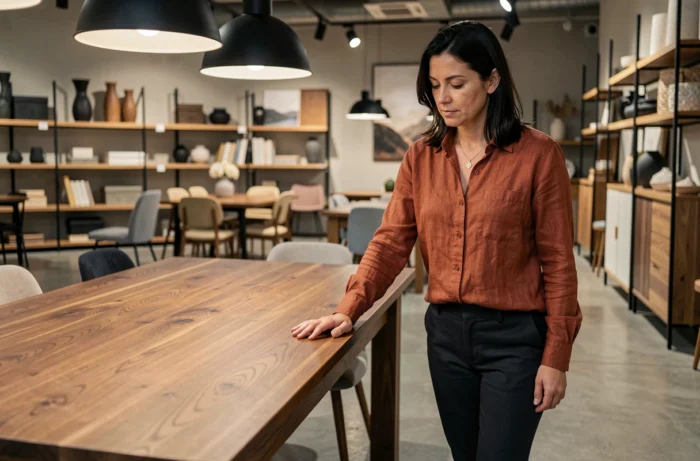
The width of the tabletop determines the comfort of the guests. Below 85 cm wide, two diners facing each other are hindered as soon as a dish is placed in the center. The standard height is around 75 cm, but thick solid wood tabletops sometimes add two to three centimeters that alter the sitting posture.
Sofa and Living Space
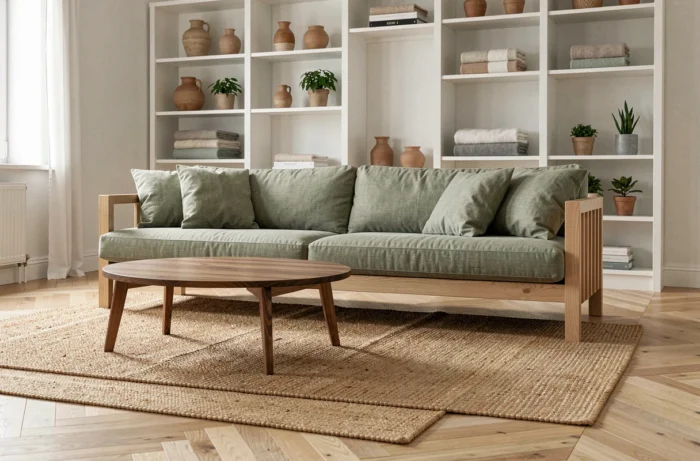
A corner sofa optimizes square meters in a rectangular living room, provided there is at least 60 cm of passage between the seating and the TV unit or coffee table. The density of the seating determines long-term comfort: high-resilience foam retains its support much longer than standard polyether foam.
Natural light also influences the choice of coverings. A light fabric exposed to full south will fade in a few seasons. Mass-dyed fabrics or pigmented leathers resist better to prolonged exposure.
Colors and Light: Coordinating Furniture and Architecture
Furniture should not be chosen independently of the room that hosts it. The temperature of natural light (cold north, warm south) guides the color palette of the furniture.
A light wood (ash, birch) compensates for a dimly lit north-facing living room. Conversely, a dark walnut gains depth in a room bathed in light. Coordinating the wood species with the orientation of the room produces a more cohesive result than following an isolated decor trend.
Matte finishes absorb light and soften reflections in highly glazed rooms. Satin or lacquered finishes reflect light and energize dark spaces. This principle applies equally to kitchen furniture as well as living or bedroom furniture.
Interior design gains coherence when the furniture first responds to the physical constraints of the space. Traceable materials, verified dimensions, finishes suited to the light: these technical considerations weigh more on long-term satisfaction than the choice of a decorative style.