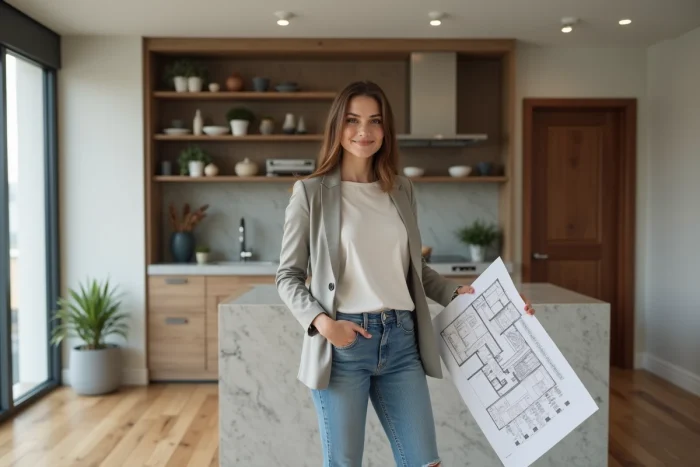
Going beyond the simple “turnkey purchase” has become the new norm: today, securing a loan is no longer enough to guarantee the success of a real estate project. The numbers are stubborn: nearly one-third of renovations end up going off track, exceeding the planned budget or accumulating delays for avoidable reasons. Yet, a thoughtful layout can increase a property’s value by an average of 15%. Nevertheless, planning pitfalls await even the most seasoned homeowners.
Some materials, both affordable and robust, hold their own against those promoted by professionals. Meanwhile, design trends change rapidly, making barely adopted choices seem outdated.
Why interior design truly transforms your quality of life
Interior design goes far beyond aesthetics. It influences how we live, move, and feel in our space. It’s hard to underestimate the impact of a well-thought-out real estate project: it’s not just about changing the living room color or replacing the kitchen, but about rethinking the layout, creating new uses, and adapting the home to contemporary reality.
Every detail matters. Natural light, ceiling height, material choices: all of this shapes the perception of an apartment or house. Hiring an interior designer is betting on an outside perspective to maximize value, comfort, and functionality. From design to finishing touches, this professional orchestrates the transformation: selecting furniture, organizing storage, choosing colors. Their involvement is anything but secondary.
Energy efficiency and quality of life intersect at every stage. Material selection affects insulation, air quality, and temperature control. A well-executed renovation does more than refresh the appearance: it modernizes, secures, and sustains the home. On immo-et-habitat.com, the reflection on the balance between aesthetics and functionality inspires every piece of advice and proposal.
A successful interior design project is tangible: smoother circulation, intelligent storage, better-utilized light. Deeply rethought, the space reveals itself, habits change, and daily life takes on a new dimension.
What pitfalls to avoid when wanting to enhance your home?
The success of a real estate project or interior design requires method and caution. First and foremost, one must scrutinize the technical constraints that the home imposes.
- Knocking down a load-bearing wall is not something to improvise,
- A poorly done thermal insulation compromises the investment’s profitability.
Conducting a complete technical diagnosis allows for detecting weaknesses, preventing unpleasant surprises, and moving forward with peace of mind.
Financial tracking also requires unwavering attention. Too much optimism leads straight to a dead end: it’s common to underestimate the cost of renovations or to forget certain items like home insurance or a contingency reserve.
- Establish a precise tracking table, from the structural work to the final finishing touches,
- Check each quote, assess the reputation of contractors, and systematically request guarantees.
Getting support from competent professionals is far from unnecessary. Here are the main players to consult:
- interior designer,
- project manager,
- notary
Rules are changing, and standards are tightening. Going without expertise risks delays, cost overruns, or even disputes. The success of a project also relies on the coordination of various stakeholders, managing the schedule, and validating technical choices to ensure overall coherence.
The administrative aspect is anything but secondary. Several steps must be anticipated:
- building permits,
- prior declarations,
- insurance compliance.
Omitting a formality or ignoring an insurance obligation exposes one to compromising the property’s valuation, or worse, jeopardizing the security of the investment.

Simple and effective tips to reveal the potential of every room
In urban spaces, customization is essential to optimize every nook. Among the concrete solutions to consider:
- Built-in shelves to utilize lost volumes,
- storage adapted to real needs,
- sliding doors or glass partitions to structure without darkening.
For the kitchen, the choice of countertop and materials makes a difference. Here are some tried-and-true options:
- Granite,
- high-end laminate,
- stainless steel for combining robustness and style.
Ensuring fluidity between preparation and reception areas radically transforms the daily use of the room.
For the bathroom, small spaces can expand by opting for wall-mounted furniture, panoramic mirrors, or glass partitions. A bathroom renovation benefits from integrating water-saving and ergonomic solutions, without neglecting current decor trends:
- Zelliges for a handcrafted touch,
- mineral tones for softness,
- matte black fixtures for contrast.
If natural light is lacking, multiply indirect light sources for a pleasant and functional result.
In the living room and dining room, the coherence of the color palette shapes the atmosphere:
- Muted tones for calming,
- bright touches to awaken the ambiance.
Favor noble materials, ideally local or eco-friendly, to enhance the character of the space. 2D and 3D plans facilitate projection, while a virtual tour allows adjustments before committing.
Finally, several financial aids accompany energy-efficient home renovations: MaPrimeRénov’, eco-PTZ, or reduced VAT encourage the use of sustainable materials, boosting both energy performance and property value. Taking these aids into account gives your project a head start.
Because a well-thought-out interior goes beyond current trends: it imprints on daily life, shapes well-being, and leaves a lasting mark long after the project is completed.