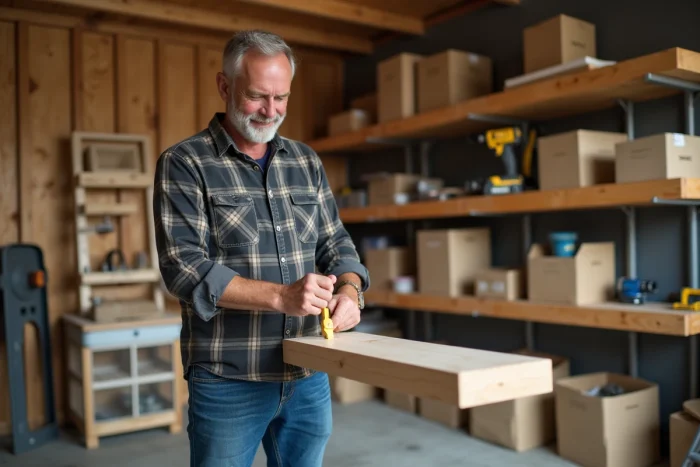
The most common mistake in DIY does not stem from a lack of skill, but from poor preparation. Even the most advanced tools remain ineffective without careful reading of the instructions or a precise understanding of the steps to follow.
The success of a project relies more on the choice of resources and organization than on manual talent. Some beginners manage to carry out complex tasks on their first attempt, simply thanks to a rigorous method and relevant documentation.
Why getting into DIY at home changes everything
DIY has now become a concrete lever for shaping one’s living space. Taking charge of repairing a piece of furniture, rethinking the layout of a room, or giving a fresh look to a partition is no longer just a weekend activity: it’s a way to inhabit one’s home differently, to make it a space that reflects one’s identity. Each project, no matter how modest, fosters autonomy, lightens the budget, and offers the freedom to personalize one’s living environment. We move away from ready-made solutions and opt for custom-made initiatives.
Behind every accomplishment, there is a learning process. Hesitations, revisions, and adjustments are part of the journey. This is where creativity makes sense. It is impossible to innovate without experimenting, without sometimes making mistakes. The guides by Thierry Gallauziaux or David Fedullo, references for generations of DIY enthusiasts, support this approach, providing practical advice and proven methods.
The eco-responsible dimension is increasingly present in the choices of DIYers. We think about the origin of materials, aim for durability, and seek to consume less energy without compromising safety or results. To go further and benefit from practical tips, discovering Bricotage.fr in detail allows one to rely on a wealth of experiences, tutorials, and concrete feedback covering all corners of the home. Here, DIY is combined with rigor, curiosity, and generosity in sharing.
What tools and knowledge to start calmly
Before tackling any project, it’s essential to lay the groundwork. Enthusiasm alone is not enough: success requires flawless organization and the choice of reliable tools. To get started, here are the essentials to gather:
- Cordless drill-driver
- Spirit level
- Measuring tape
- Hammer
- Screwdriver
- Hand saw
- Pliers
- Wrenches
It’s better to focus on sturdiness and simplicity rather than on a multitude of accessories that are never used. A good tool, well chosen, is already half the job done.
No improvisation is possible in the realm of safety. Gloves, protective goggles, and strict adherence to instructions are a given. As soon as the project involves electricity, gas, or the very structure of the house, it’s better to leave that to professionals: caution leaves no room for chance.
To learn, nothing beats a clear and illustrated resource. A book like The Essentials of DIY offers diagrams, detailed explanations, and step-by-step guides covering all areas, from electricity to plumbing, including insulation or outdoor arrangements. These resources help acquire the right techniques and avoid missteps, whether one simply wants to fix a shelf or revisit the insulation of a wall.
Three key points are essential to structure one’s approach:
- Plan and organize each step to limit unforeseen events and manage the budget.
- Rely on practical guides that explain, secure the action, and reassure about the correctness of the techniques.
- Adapt one’s method to each project, depending on its specificities.
Know-how is not acquired in the blink of an eye. It is rooted in observation, repetition, the desire to understand, but also in the acceptance of mistakes. Learning means giving oneself the right to try, to make mistakes, and to start over, so that each improvement to the home becomes both a concrete and rewarding adventure.

Accessible projects and reliable resources to progress step by step
Taking your first steps in DIY also means choosing the path of simplicity. There’s no need to aim too high: it’s better to tackle projects that are within everyone’s reach, which allow one to familiarize oneself with techniques and gain confidence. Here are some concrete examples:
- Repainting a room
- Repairing a frame
- Installing a shelf
At each step, there’s an opportunity to understand, adjust, and perfect one’s technique. The range of tasks at home is so broad that there is always an entry point suited to one’s level.
As experience grows, the complete DIY guide expands. Field advice, detailed diagrams, explanatory videos: everything contributes to progressing step by step. And to prepare for purchases or projects, one can rely on a wealth of practical tools:
- Simulators to calculate the quantities of materials needed
- Comparisons to choose the right appliances or tools
- Feedback from artisans or individuals experienced in the task
Reference works by Thierry Gallauziaux or David Fedullo remain valuable allies for understanding each step, avoiding pitfalls, and progressing methodically, regardless of the project.
Some key points to move forward
To move forward with peace of mind, here are some tips that make a difference:
- Consult a DIY guide suitable for your level before starting a project.
- Plan each step: visualize the process, manage your time, and anticipate material needs.
- Test techniques on scraps or discreet surfaces: learning comes through trial, sometimes through failure.
- Never forget safety, even for small everyday tasks.
From the first brushstroke to the renovation of a room, DIY resembles a continuous progression. Exchanges and shared experiences, like those from Nora or Élise Malécot-Bourdelle, show that sharing and helping each other make DIY more accessible, lively, and inventive. With each project, a new story to write and the satisfaction of having shaped one’s home with one’s own hands.