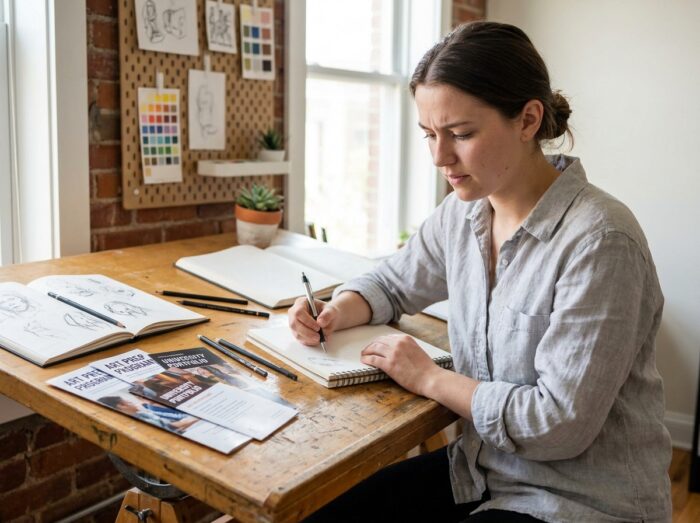
You’re looking for a drawing preparatory course, you type a few words into a search engine, and the list that appears looks like a catalog without a user manual. Public and private preparatory courses, intensive workshops, evening classes, hybrid formats: the offerings have significantly expanded in recent years. The problem is not the lack of choice, but the absence of a framework to compare programs that are not alike.
Drawing preparatory course format: intensive, hybrid, or evening classes
The first filter to apply is not the name of the school, but the format. A full-time preparatory course occupies the entire week, with daily workshops and a fast pace. This format is suitable for students who have completed high school and can dedicate themselves exclusively to it.
Recently, hybrid preparatory courses combine in-person workshops and online modules. This format addresses a simple constraint: not everyone lives near a big city, and not everyone has the budget for a year in Paris. The hybrid model allows students to attend practical classes on-site during grouped sessions, then work remotely the rest of the time.
There are also lighter options designed for high school seniors. Evening or weekend classes allow students to start building an artistic portfolio without dropping out of their academic curriculum. These options do not replace a full year, but they help test motivation and improve drawing skills before committing. Before choosing a drawing preparatory course to prepare for the entrance exams, it’s best to know what hourly commitment you can realistically handle.
Portfolio and art school entrance exams: what the preparatory course should actually prepare you for
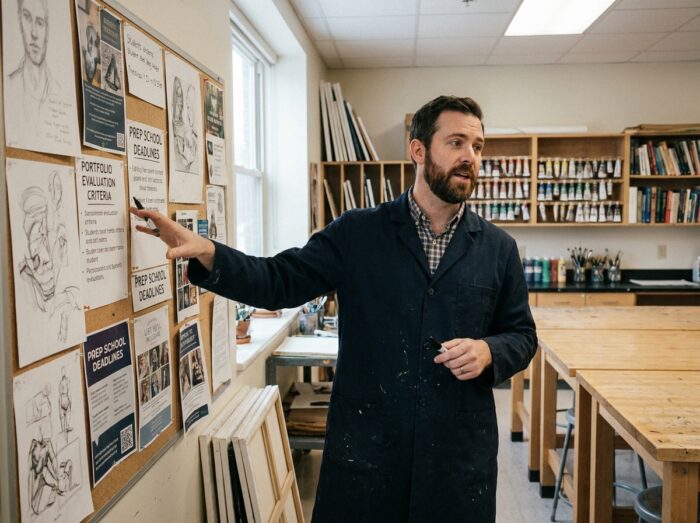
A drawing preparatory course is not an enhanced drawing class. Its goal is to make you eligible for a higher art or design school. This involves two concrete things: building a strong portfolio and being able to defend a project orally.
The portfolio is the decisive document. Art school juries look for a personal approach, not a collection of academic copies. A good preparatory course encourages you to experiment with various techniques (drawing, volume, color, photography, collage) and to develop a unique perspective. If the training is limited to observational drawing for ten months, it misses the point of the exercise.
Artistic culture and written expression
The entrance exams are not solely based on drawing. Several schools include a general culture or written reflection test. Check that the preparatory course includes classes on artistic culture, art history, or image analysis. A candidate who can articulate their practice with cultural references stands out significantly during interviews.
Ask the school a direct question: what percentage of your students received at least one admission last year, and to which schools? A preparatory course that refuses to answer or remains vague about its results deserves skepticism.
Drawing preparatory course in Paris or in the regions: the real cost of a year of preparation
The displayed tuition fees do not tell the whole story. A year of private preparatory course in Paris involves rent, transportation costs, and materials. The overall budget can become very high, especially if you add an additional year in case of failure in the entrance exams.
Public preparatory courses, free or nearly free, are few in number (about twenty in France according to available data) and selective. They host small cohorts, often between twenty and thirty students, which ensures personalized support but makes access competitive.
In the regions, preparatory workshops offer more accessible rates. Some private institutions have also opened programs that include work-study options for subsequent years, which can reduce the overall cost of the creative curriculum over several years.
- Compare the total cost (tuition, housing, materials) and not just the registration fees displayed on the website.
- Inquire about specific scholarships or aids: some public preparatory courses provide access through student status, particularly CPES-CAAP programs partnered with a university.
- Ask whether basic materials (paper, paint, tools) are provided or at your expense, as this can weigh heavily on a tight budget.
Class size and educational support: two underestimated criteria
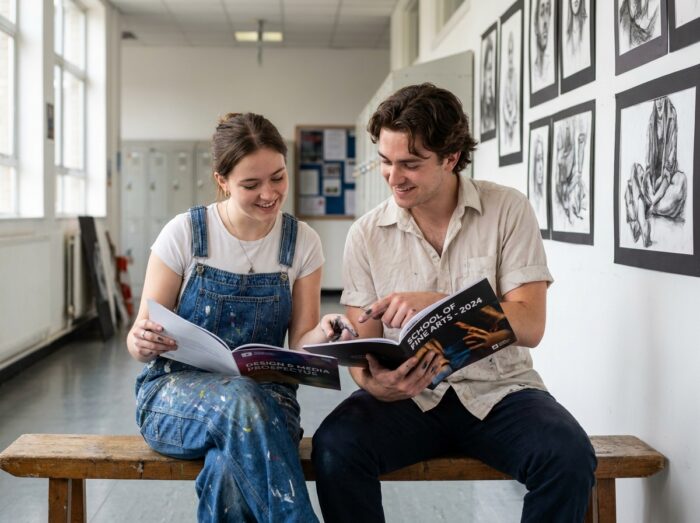
Have you noticed that a class of thirty students and a class of one hundred twenty do not produce the same learning outcomes? In a drawing preparatory course, the difference is even more pronounced because the work is individual. Each student develops their own portfolio, with their own weaknesses to address.
Close supervision changes the trajectory of an artistic portfolio. In a small cohort, teachers quickly identify technical blockages or gaps in a project. In a structure that accommodates several dozen, or even hundreds of students, the support inevitably becomes more standardized.
Teacher profiles
Check who teaches. Active artists or designers bring a perspective grounded in professional reality. Teachers who understand the expectations of higher education juries guide portfolio work more specifically than a generalist instructor.
- Ask about the number of students per cohort and the teacher/student ratio during practical workshops.
- Inquire about the frequency of individual project follow-up meetings.
- Look for testimonials from former students about their experiences, on social media or during open house days.
The choice of a drawing preparatory course rests on three concrete decisions: the format compatible with your situation, the program’s ability to prepare a viable portfolio, and a cost you can sustain over time. Visit the workshops, talk to current students, and compare the results in the entrance exams rather than the promises of brochures.