For several years, France’s regulatory framework has encouraged healthcare professionals to provide support that goes beyond the medical procedure itself. In 2015, the French National Authority for Health (HAS) formalized a patient-centered approach based on partnership between healthcare professionals and patients.
More recently, the 2024–2034 ten-year strategy for supportive care has extended this approach to psychological, social and palliative needs, starting from the diagnosis of a serious illness. These developments broaden the scope of practitioners’ work, while also introducing new requirements for interpersonal skills and coordination.
Personalized health support: what healthcare professionals’ skills involve
Literature on patient support often focuses on the skills patients need to acquire (self-care, self-management, adherence to treatment). The healthcare professional’s role is less well documented. An article in the journal Santé Publique notes that the skills professionals need to provide “patient-partner” support receive little attention in discussions about patient empowerment.
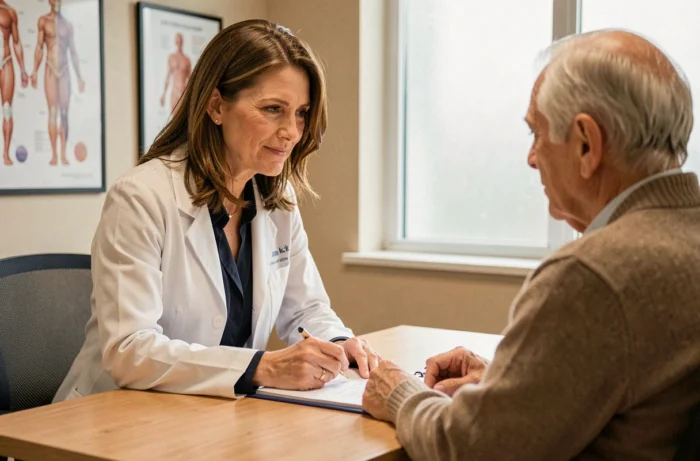
These skills go beyond clinical expertise. They include the ability to structure a dialogue that reveals the patient’s perspective, feelings and life priorities. The HAS refers to a “structured dialogue” that helps professionals understand what matters to the person beyond their diagnosis.
In practice, this means that Acte Santé professionals and their counterparts in the field need to bring together three approaches: active listening, sharing information tailored to the patient’s level of understanding, and co-creating a care plan that can be revised over time.
- Active listening goes beyond taking a medical history: it takes into account the patient’s psychosocial context, everyday constraints and stated or unspoken preferences.
- Sharing information means checking that the patient has genuinely understood, rather than simply agreed, and adapting the language to each person.
- Co-creating a care plan involves the patient as a decision-making partner, changing the practitioner’s usual role as the person who prescribes treatment.
Therapeutic patient education and patient partnership: two complementary approaches
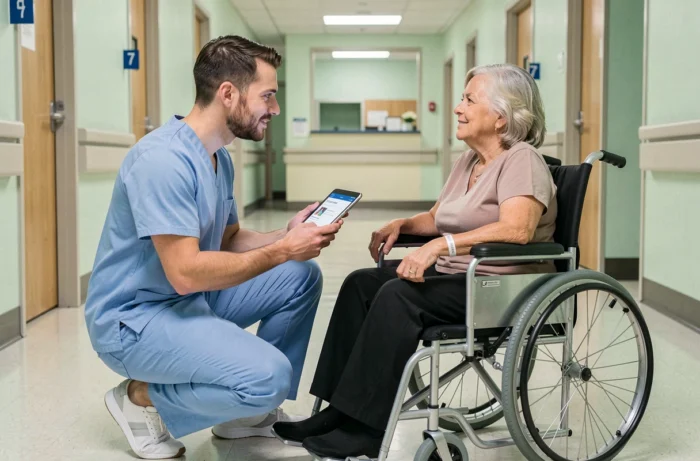
Therapeutic patient education (TPE) aims to equip patients to manage their condition in everyday life. It is based on structured programs, often delivered in groups, with defined learning objectives. The “patient-partner” approach goes a step further: it recognizes patients’ lived experience as a form of expertise in its own right, which can be brought into the care process itself.
Poitiers University Hospital has documented a patient-partner group whose role extends beyond simply taking part in TPE workshops. These patients contribute to healthcare professional training, share information with their peers and help organize care pathways. Their contribution changes institutional dynamics by bringing in an outside perspective grounded in lived experience.
The distinction between the two approaches has practical implications. TPE can operate within a relatively standardized framework (modules, handouts, protocols). Patient partnership requires ongoing adaptation to each individual’s profile, making it difficult to standardize. For healthcare professionals, this means accepting a degree of unpredictability in the care relationship.
Personalized prevention: support before illness develops
Personalized support does not begin at diagnosis. The INTERCEPTION program, developed by Gustave Roussy, offers people with identified cancer risk factors a care pathway combining risk assessment, targeted prevention, tailored screening and coordinated follow-up between community and hospital care. The program is available at several centers and is part of a national trial being evaluated at seven institutions.
This type of program illustrates a shift from curative care toward individualized prevention. The pathway may include funded nutritional support or addiction services—two areas that go beyond conventional medical prescribing but directly affect prognosis.
A known limitation of these programs is their reach. INTERCEPTION remains tied to specialist centers. For healthcare professionals in community settings, the question is how to incorporate targeted prevention into a general practice consultation without access to the same coordination resources.
Palliative care and comprehensive support: the framework of the 2024–2034 ten-year strategy
France’s 2024–2034 ten-year strategy provides for tailored care from the diagnosis of a serious illness, addressing the patient’s physical, psychological and social needs, as well as those of their loved ones. This marks a shift away from viewing palliative care as something limited to the end of life.
For healthcare professionals, the strategy means coordinating practitioners with very different areas of expertise: doctors, nurses, psychologists, social workers and, in some cases, educators or family support workers. An interprofessional day organized in 2016 by the FILNEMUS network had already raised the question of collaboration across disciplines, identifying patient support as a way to foster interprofessional practice.
The practical challenge lies in coordinating these practitioners. Each has their own framework, time constraints and funding arrangements. Without a shared coordination tool, support risks remaining fragmented, with each person working in a silo despite the goal of providing comprehensive care.
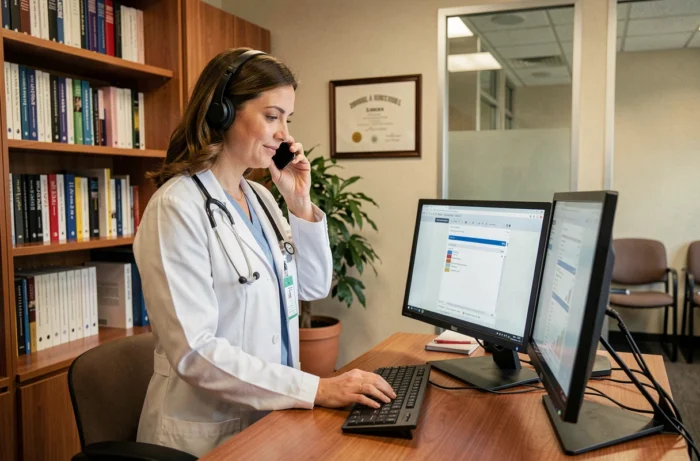
Interpersonal skills training for healthcare professionals: a persistent blind spot
Several sources point to the same conclusion: initial training for healthcare professionals gives limited attention to interpersonal skills. Listening techniques, paraphrasing, managing patients’ emotions and communicating in conflict situations are covered to varying degrees across training programs.
The concept of “calm care,” discussed in recent literature, assumes that healthcare professionals can adapt their approach to patients whose behavior or needs fall outside the usual framework: people with disabilities, patients with cognitive disorders and people experiencing severe social hardship. This ability to adapt interpersonal approaches cannot be improvised and requires specific training.
There is not enough data to accurately assess the impact of structured interpersonal skills training on the quality of patient support. Feedback from initiatives such as Poitiers University Hospital’s patient-partner training program suggests benefits, but large-scale studies remain rare in France.
Supporting each patient in a way that meets their needs draws on skills that traditional medical training only partially covers. The 2024–2034 ten-year strategy, prevention programs such as INTERCEPTION and patient-partner groups offer practical ways forward. Their wider adoption depends on the healthcare system’s ability to fund interprofessional coordination and integrate interpersonal skills into training programs.